Loading...
Serving Stillwater, OK and surrounding areas. (405) 338-4339
Stillwater's clay soils and humid summers push moisture into crawl spaces year after year. A properly installed vapor barrier seals that cycle at the source so your floors stay solid and your home smells like a home.
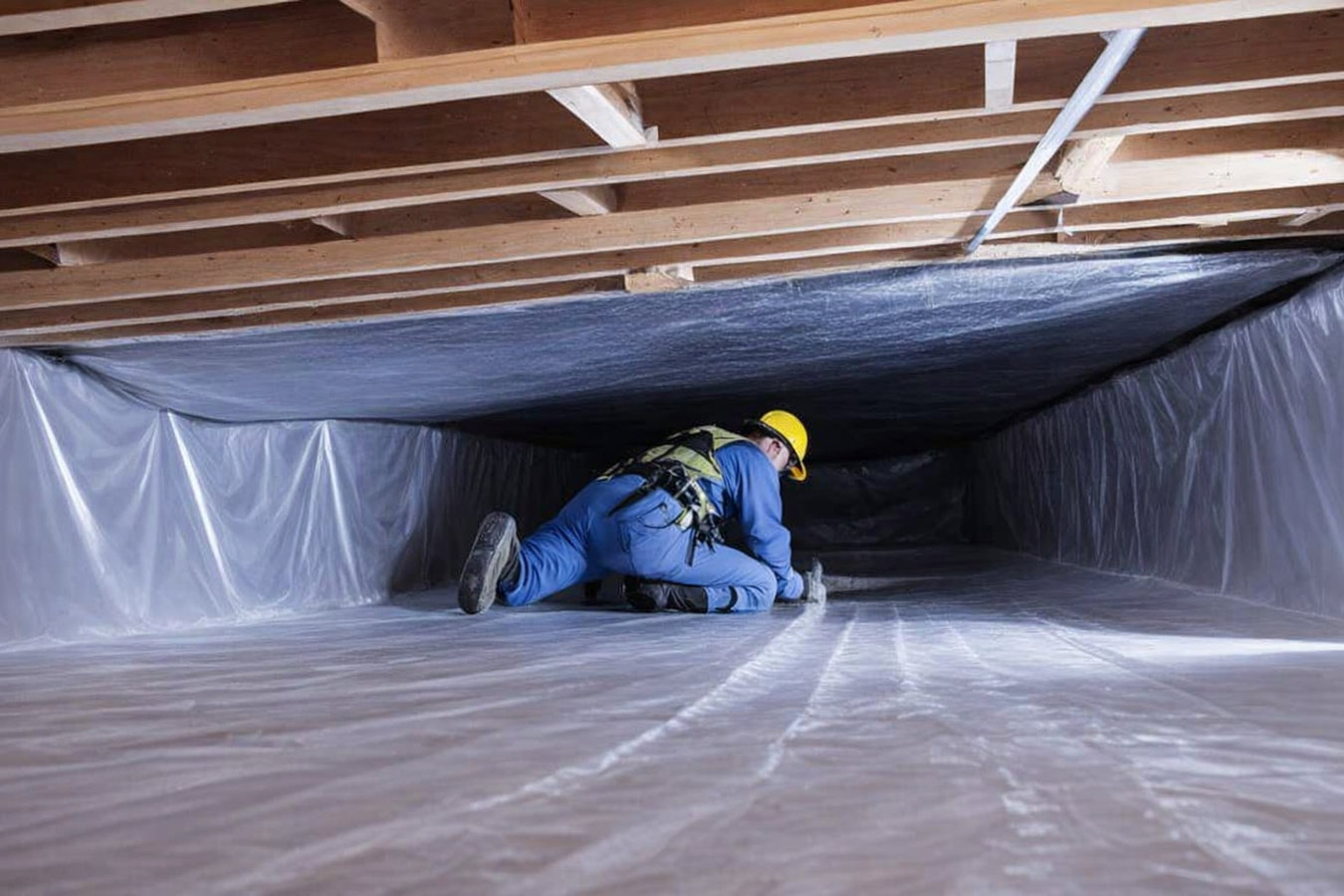
Vapor barrier installation in Stillwater covers the crawl space floor with heavy-duty plastic sheeting that blocks ground moisture from rising into your home - most jobs are completed in a single day. The material is laid across the ground, overlapped at the seams, run up the foundation walls, and sealed so moisture cannot work through any gaps.
For Stillwater homeowners, this is not an optional upgrade - it is a practical necessity for most homes. The city sits on clay-heavy soils that stay damp long after rain ends, and hot, humid summers create ongoing condensation pressure under any home without proper moisture control. Homes built before the 1990s are especially likely to have no barrier, or one that has degraded to the point of being ineffective.
If your home also needs air sealing work above, combining vapor barrier installation with attic air sealing addresses moisture and air infiltration at both ends of your home for the most complete result.
If your floors feel noticeably cold underfoot during Stillwater's winter months, or if there are spots that feel slightly soft or spongy when you walk, moisture damage to the wood underneath may already be underway. Cold floors in a home with a crawl space often mean the space below is not properly sealed and damp air is affecting the structure above it.
A persistent musty or earthy smell inside your home - especially one that gets stronger during Stillwater's hot, humid summers - is one of the clearest signs that moisture is building up in your crawl space. That smell is almost always mold or mildew, and it travels up through your floors and into the air your family breathes every day.
If you have looked into your crawl space and noticed water droplets on the pipes or dark staining on the wooden floor joists, moisture is doing visible damage. In Stillwater's humid summers, this kind of condensation is common in crawl spaces that lack a proper barrier. Left alone, it leads to rust on pipes and rot in the wood that holds up your floors.
Many Stillwater homes built before the 1990s were never fitted with a proper moisture barrier, or had only a thin sheet of plastic laid loosely on the ground. If no one has ever looked under your house, there is a real chance the crawl space needs attention - especially on the clay soils common across this part of Oklahoma.
We install vapor barriers to fit the specific conditions of your crawl space, using polyethylene sheeting rated 10 mils or thicker. Seams are overlapped by at least a foot and fully taped, and the material runs up the foundation walls so moisture cannot enter from the sides. Where needed, we remove old degraded material before laying the new barrier so you are not just covering a problem.
For homes where the crawl space vapor barrier alone is not enough, we can assess whether additional work - like improved ventilation or a connection to the full crawl space vapor barrier system - makes sense. We do not add recommendations you do not need, but we will tell you honestly what we find and what your options are.
Covers the full floor area with sealed, taped seams - the right starting point for most Stillwater homes.
Extends barrier up the foundation walls for homes where moisture is entering from multiple directions.
Removes old, torn, or degraded plastic before installing fresh material - suited for homes with previous work that has failed.
Pairs vapor barrier with insulation or air sealing work for homeowners addressing multiple performance issues at once.
Stillwater's climate creates a two-season moisture problem for homes with crawl spaces. Spring and early summer bring heavy rainfall that saturates the clay soil under the city and keeps it wet for weeks. Then summer heat and humidity create ongoing condensation pressure against any unprotected surface below your floors. Freeze-thaw cycles in winter add additional stress, causing older vapor barrier materials to crack and shift over time. For homes built before the 1990s - which make up a significant share of Stillwater's housing stock, especially near the OSU campus - this is a real and ongoing problem that gets more expensive to address the longer it goes unattended.
We serve Stillwater homeowners and communities across the region, including Yukon and Mustang, where similar soil conditions and housing ages create the same crawl space challenges. The U.S. Department of Energy and the Insulation Contractors Association of America both recognize vapor barriers as one of the most cost-effective ways to protect a home's structure and indoor air quality in humid climates.
The first conversation is short - we will ask about your home's age, whether you have noticed moisture or odor issues, and how accessible your crawl space is. We respond within 1 business day and schedule an in-person assessment before giving you a firm price.
We physically get under the house to check the size of the space, any existing material that needs removal, signs of mold or standing water, and how easy it is to work. This visit takes 30 to 60 minutes, and you will typically receive a written estimate within a day or two.
The crew removes any old or damaged material, lays the new barrier across the ground, overlaps the seams, and runs the edges up the walls. Every seam and edge gets sealed. For a typical Stillwater home, this takes most of one day and your living space is not affected.
Before leaving, we show you photos of the finished installation and explain what was done and why. You should leave knowing exactly what was installed and what to watch for going forward. Most homeowners notice the smell fading and floors feeling more comfortable within a few weeks.
Free estimate, no obligation. We will come out, look under your home, and give you a clear written quote before any work begins.
(405) 338-4339Stillwater Insulation gives you a written scope of work and documentation on every job. That record means you have a place to turn if anything is not right.
We use polyethylene sheeting rated 10 mils or thicker - well above the thinnest materials that cut-rate contractors use. Properly rated material lasts longer and holds up when someone needs to access the crawl space for future repairs.
We know Stillwater's clay-heavy soils, the high concentration of older homes near the OSU campus, and the seasonal moisture patterns that make vapor barriers a practical necessity in this part of Oklahoma - not just a nice-to-have.
We photograph the finished installation before we leave so you have a record of what was done. That documentation is useful for your peace of mind and valuable as disclosure when you sell your home.
Every home we work on gets a contractor who has seen what Stillwater's soils and climate do to crawl spaces over time. We do the job right the first time and leave you with documentation to prove it.
Address moisture and air movement at the top of your home while your crawl space is protected at the bottom.
Learn moreFocused specifically on the crawl space floor - the right starting point for most Stillwater homes dealing with ground moisture.
Learn moreStillwater's summer humidity season is coming - get your crawl space sealed before moisture problems compound and repairs become more expensive.