
Loading...
Serving Stillwater, OK and surrounding areas. (405) 338-4339
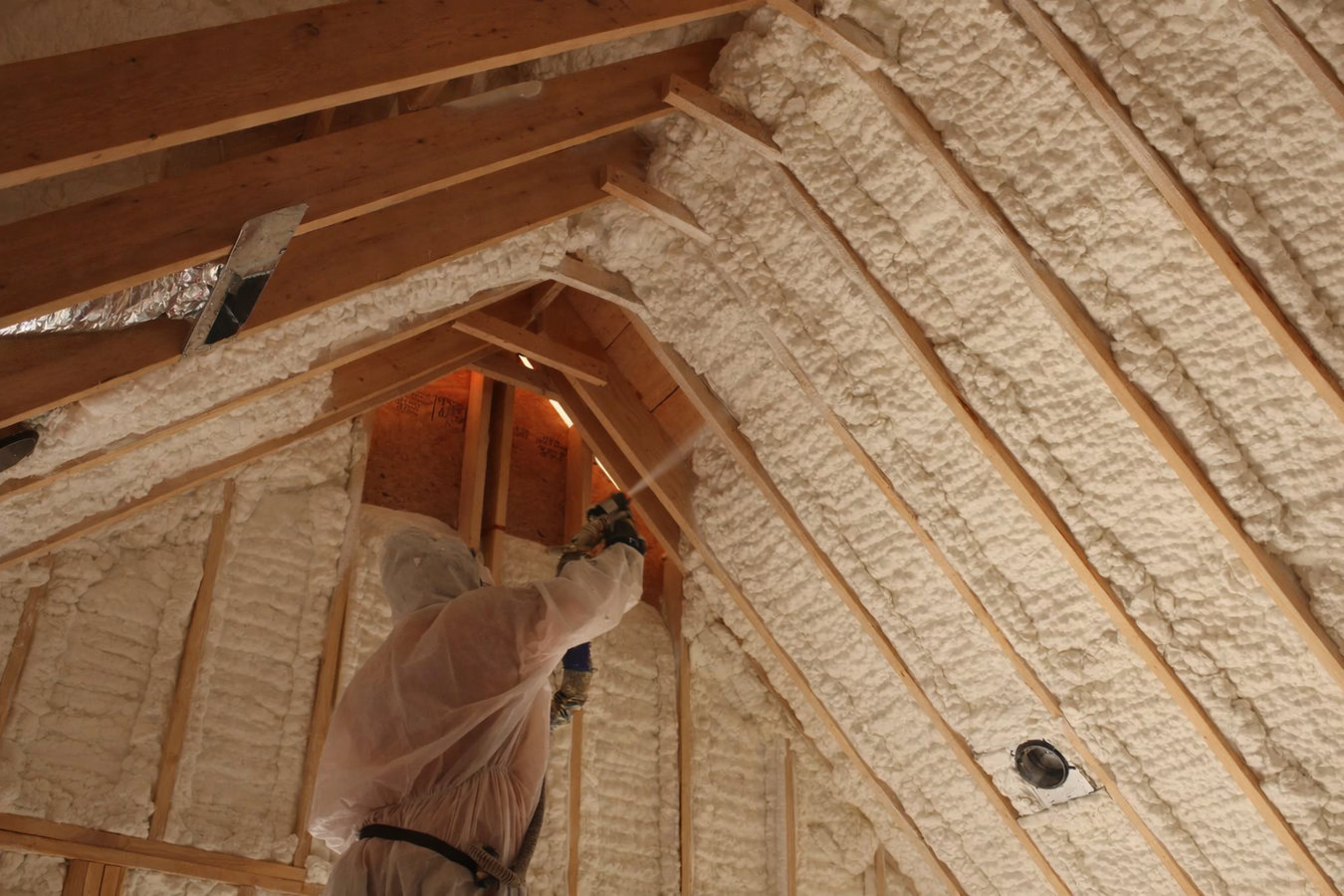
Oklahoma heat and cold snaps expose every gap in your home. Open-cell spray foam seals air leaks and insulates at the same time, so your system stops working overtime just to keep up.
Open-cell foam insulation in Stillwater seals air leaks and insulates simultaneously - most attic or wall jobs are completed in a single day. It is sprayed as a liquid that expands up to 100 times its original volume, filling every gap, crack, and irregular space in a way that fiberglass batts simply cannot.
Stillwater homeowners deal with summer attic temperatures well above 120 degrees, cold fronts that arrive with little warning, and humid spring air that finds its way into older wall cavities. Standard insulation slows heat transfer but does not stop air movement - and it is the moving air that makes your home feel uncomfortable and drives your utility bills up. Open-cell foam stops both problems at once.
If you are also dealing with moisture in a crawl space or need maximum R-value in a tight area, our spray foam insulation service covers both open-cell and closed-cell options so we can recommend the right material for each part of your home.
If the second floor or rooms directly under the roof stay noticeably warmer than the rest of the house during Stillwater's peak summer heat, your attic insulation is failing to block the heat radiating down from above. This is one of the most common complaints from homeowners in older Stillwater neighborhoods. Inadequate or deteriorated attic insulation is almost always the cause.
If your OG&E or Oklahoma Natural Gas bills keep rising but your usage habits have not changed, air leaking in and out of your home is often the culprit. Open-cell foam seals those leaks at the same time it insulates, which is why homeowners who upgrade often see their bills drop noticeably within the first billing cycle.
Hold your hand near an electrical outlet on an outside wall on a cold winter day - if you feel cool air moving, your wall cavities are not properly sealed. This is especially common in Stillwater homes built before 1980, where exterior walls were often left uninsulated or filled with materials that have since settled or degraded.
Open-cell foam is a good sound absorber, so homes with thin or missing insulation tend to be noticeably louder. If you can clearly hear traffic, neighbors, or wind from inside your home, your insulation is likely thin or absent in those areas. Adding foam in the walls and attic makes a real difference in how quiet the interior feels.
We install open-cell foam in attics, interior walls, and crawl spaces throughout Stillwater and the surrounding area. Open-cell foam is the most practical choice for attic applications - it is applied to the underside of the roof deck, turning the attic into a conditioned space that stops heat from radiating down into your living areas all summer long. For older homes near the OSU campus with little or no wall insulation, we can inject foam into existing wall cavities through small holes that are then patched, so you get a meaningful upgrade without tearing out drywall.
For homeowners who need more than insulation, we pair open-cell foam work with commercial insulation for mixed-use or business properties, and we always assess whether a full air sealing approach is warranted before recommending a product. If your crawl space or exterior walls have direct moisture exposure, we will be straightforward about when closed-cell spray foam is the better fit rather than open-cell.
Ideal for homeowners who want to stop summer heat from radiating through the ceiling and reduce the load on their AC.
Suited to older homes where wall cavities have little or no insulation and drywall removal is not practical.
For homeowners who notice cold drafts at floor level during Oklahoma winter cold snaps.
Best for rooms between floors or adjacent to noisy exterior walls where traffic and wind are clearly audible inside.
An option for dry crawl spaces without standing water - paired with vapor barrier where moisture is present.
Suited to builders and homeowners adding a home who want air sealing built in from the start.
Stillwater sits in DOE Climate Zone 3A - a mixed-humid zone where summers are long and hot, winters bring real cold snaps, and humidity creates moisture challenges that insulation has to account for. Attic temperatures in July can exceed 130 degrees in poorly ventilated spaces, pushing heat through the ceiling all day and well into the evening. Oklahoma Natural Gas and OG&E rates have both increased in recent years, which means the return on an insulation upgrade is faster than it was a decade ago. Open-cell foam is particularly well-suited to Oklahoma's climate because it handles the temperature swings in both directions while also cutting the air infiltration that drives so much of the discomfort.
A large share of Stillwater's housing was built between the 1940s and 1980s to serve the OSU campus and surrounding community - and many of those homes were constructed with either no insulation or materials that have long since degraded. Homeowners in these neighborhoods have some of the most to gain from a foam upgrade. We serve all of Stillwater and the surrounding region, including homeowners in Ponca City and Enid who face the same climate conditions. The Spray Polyurethane Foam Alliance publishes installation best practices that we follow on every job.
Reach out by phone or through our contact form. We will ask about your home's age, which areas you want insulated, and any comfort or energy problems you have noticed. We respond within 1 business day.
We walk your home - typically 30 to 60 minutes - looking at the attic, crawl space, or walls depending on your concerns. We check for moisture issues that need to be fixed first and measure the area to give you an accurate written quote.
The crew masks off electrical boxes, vents, and surfaces that should not be foamed, then sprays the foam in sections. It expands and hardens within seconds. Most residential jobs are finished in a single day, sometimes just a few hours.
You stay out of the treated area for two to 24 hours while the foam cures and any odor dissipates. We give you a specific re-entry time before leaving, then walk you through the finished coverage so you can see it yourself.
Free written estimate. No pressure. We respond within 1 business day.
(405) 338-4339Stillwater Insulation gives you a written scope of work and documentation on every job. That record means our work is accountable and you have a place to turn if anything goes wrong.
We know the older housing stock near the OSU campus, the clay soil conditions that affect moisture in crawl spaces, and the wind-driven air infiltration that Oklahoma plains homes face every winter. Local knowledge shapes how we approach every job.
Every quote includes a full written scope of work - what areas will be treated, how thick the foam will be applied, and the total cost - before anyone picks up a tool. We will not ask you to decide on the spot.
We follow guidelines from the Spray Polyurethane Foam Alliance for every application. That means even coverage, no thin spots, and foam trimmed flush with framing after curing. You can verify SPFA standards yourself at the organization's website.
Open-cell foam done right is one of the most durable improvements you can make to a Stillwater home - it does not settle, sag, or compress over time the way fiberglass batts do. Every job we do is backed by a written scope of work and carried out by an experienced Oklahoma insulation crew.
Open-cell foam applied to commercial buildings reduces utility costs and creates a more consistent indoor climate across the whole space.
Learn moreCompare open-cell and closed-cell options side by side and find the right foam type for your specific project.
Learn moreScheduling fills up fast once Oklahoma temperatures climb - reach out now and we will get you on the calendar before the wait starts.