Loading...
Serving Stillwater, OK and surrounding areas. (405) 338-4339
High summer bills, uneven temperatures, and drafty winters are signs your home is losing energy it should not be. Proper home insulation fixes that - and most projects pay for themselves in a few years.
Home insulation in Stillwater, OK slows heat movement through attics, walls, and crawl spaces to keep your living space comfortable year-round - most standard attic jobs are completed in a single day with no need to vacate your home.
Stillwater sits in a climate zone where summer highs regularly push past 100 degrees and winter lows can drop below 10 degrees in a bad cold snap. That is a swing of more than 90 degrees, and your insulation has to perform at both extremes. Homes built in Stillwater before 1990 were constructed under much looser energy standards than today, and many have original insulation that has settled, thinned, or degraded over the decades.
If you are dealing with specific old or damaged material, our insulation removal service handles that step first so new material goes into a clean, dry space. Most home insulation projects address more than one area - the right combination depends on where your home is losing the most energy.
If your cooling costs in July and August feel out of proportion to the size of your home, poor attic insulation is one of the most common culprits. Stillwater's summer heat is relentless, and an under-insulated attic can reach extreme temperatures, forcing your air conditioner to work overtime. If your bills have been creeping up year after year without a clear explanation, an insulation contractor should take a look.
Walk through your home on a hot July afternoon or a cold January evening and pay attention to temperature differences between rooms. If one bedroom is always stuffy and warm while the living room feels fine, or a room over the garage is freezing in winter, those are signs that insulation coverage is uneven. This is especially common in older Stillwater homes where additions were built without matching the original structure's insulation.
Hold your hand near an electrical outlet on an exterior wall on a windy day. If you feel cool air coming through, your walls have air gaps that insulation and sealing could fix. This is a common issue in Stillwater's pre-1990 housing stock, where wall insulation was often minimal and air sealing was rarely done at all.
After a significant hail storm or period of heavy rain - both common in Stillwater's spring - moisture can work its way into your attic or walls. If you have had any roof damage, even minor, it is worth having someone check whether water reached your insulation. Wet insulation does not just stop working - it can lead to mold and structural damage if left in place.
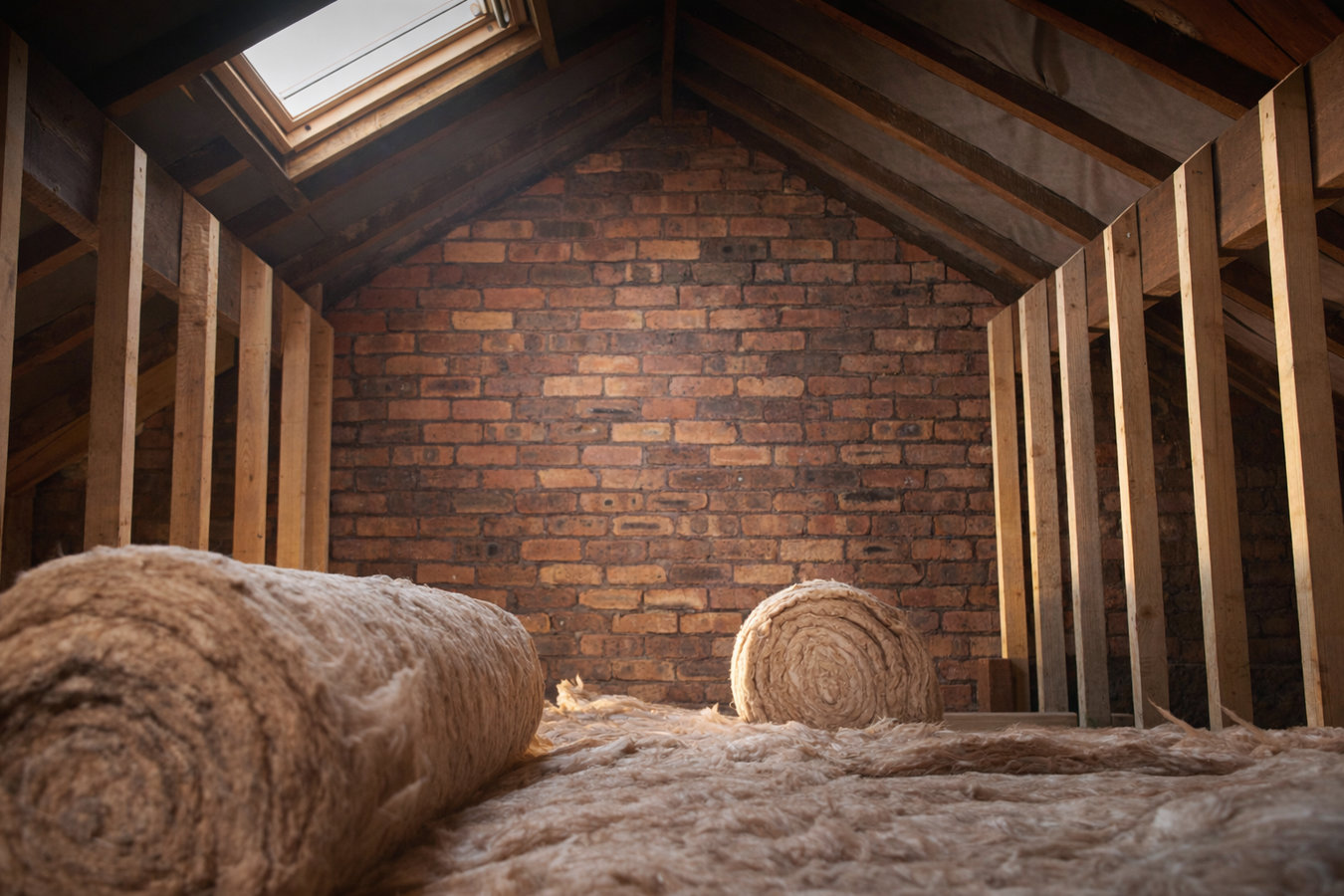
We assess and upgrade insulation across the whole home - starting with the attic, which is where most heat is lost in Oklahoma homes, and extending to walls and crawl spaces where needed. Most homeowners start with an attic upgrade because it delivers the fastest return, but a complete picture of your home's energy performance often reveals that walls or the crawl space also deserve attention. If you are not sure where the problem is, we figure that out during the free assessment.
Old or damaged material sometimes has to come out before new insulation goes in. Wet, moldy, or pest-damaged insulation traps moisture and makes conditions worse if it stays in place. We handle removal and disposal as part of the project when needed, and then start fresh with the right material for your home's structure and your budget. For homes where specific wall coverage is the priority, our wall insulation service goes into detail on how we address wall cavities in existing homes without tearing out drywall.
Brings attic coverage up to the level Oklahoma's climate demands - the highest-impact upgrade for most homes.
Fills irregular attic spaces and wall cavities without demolition - ideal for older homes with lots of obstructions.
Suits open wall cavities during renovations - installed in sections and sized to fit between studs.
Seals and insulates at the same time - best for rim joists, crawl spaces, and areas with significant air leakage.
Addresses ground moisture and heat loss through the floor - especially important for homes with vented crawl spaces.
For homes where old or damaged material needs to come out before new work can go in.
Stillwater's housing stock spans many decades. Older homes near the OSU campus and in neighborhoods like College Hill and Westwood date back to the 1920s through 1950s, while newer subdivisions on the south and west sides were built in the 1990s through 2010s. This range means some homes have never had an insulation upgrade, and others may have had work done years ago that no longer meets recommended standards. Oklahoma's extreme temperature swings - 100-degree summers and periodic hard freezes that drop into the single digits - put every gap in your home's thermal envelope to the test every year.
Stillwater is also squarely in Tornado Alley, and the region's frequent severe storms can drive moisture into attics and wall cavities over time - especially if roof damage goes unnoticed. Homeowners who have had any storm activity should have someone check whether moisture reached their insulation before assuming it is still performing. We serve homeowners across Stillwater and in surrounding communities, including Edmond and Norman. The ENERGY STAR sealing and insulation guide is a reliable starting point if you want to understand the scope of what a whole-home insulation improvement covers.
We ask about your home's size, age, and what is prompting your call. Most reputable contractors offer free in-home estimates, so you pay nothing just to find out what the job involves. We respond within 1 business day and typically schedule visits within a few days.
We inspect the attic first, then the crawl space or basement if you have one, and sometimes the walls. We measure what is already there, look for signs of moisture or pest damage, and identify gaps that need sealing before insulation goes in. The visit takes 30 to 60 minutes and ends with a written quote in plain terms.
The crew seals any gaps and penetrations first, then installs the insulation. For a standard attic job, most of the work happens above you and you can go about your normal routine. Before they leave, a good crew cleans up the work area and walks you through what was done.
You can use your home normally right away in most cases. We leave you with documentation of the materials installed - keep this for your federal tax credit or utility rebate from OG&E or PSO. Within the first few weeks you should notice a difference in how consistently comfortable your home feels.
Free in-home assessment. Written estimate. No pressure to commit on the day.
(405) 338-4339Stillwater Insulation gives you a written scope of work and documentation on every project. That record means you always know what the work covers and have a formal place to turn if anything is not right.
We do not quote a home insulation job without first looking at what is already there. Recommending a specific product or coverage level without inspecting your attic and crawl space first is how contractors end up doing work that does not match your home's actual needs.
A significant share of Stillwater's housing stock dates back to the decades before modern energy codes, including many homes near the OSU campus and in in-town neighborhoods. We know what those homes typically have - and what they typically need - which means fewer surprises on installation day.
Insulation without air sealing is one of the most common reasons homeowners do not get the savings they expected. We include a gap and leak assessment with every home insulation project and discuss sealing options before any material is installed.
Home insulation is one of the highest-return improvements most Stillwater homeowners can make - and the results show up quickly in comfort and in bills. Doing it right from the start means you are not revisiting the same problem in five years.
The U.S. Department of Energy insulation guide covers recommended R-values by climate zone and explains how different insulation types compare. It is a good reference if you want to understand what the target is for your home before getting a quote.
When old or damaged insulation needs to come out before new material goes in, proper removal is the first step.
Learn moreComplete your home's thermal envelope by addressing wall cavities where heat escapes through exterior surfaces.
Learn moreLate summer and fall are ideal times to schedule - beat the cold season rush and lock in comfort before the first Oklahoma freeze.