Loading...
Serving Stillwater, OK and surrounding areas. (405) 338-4339
Cold floors in winter and high energy bills year-round are two signs your basement needs attention. We insulate walls, ceilings, and rim joists so your home holds temperature and your HVAC runs less.
Basement insulation in Stillwater creates a thermal barrier between your basement and the rest of your home - most projects covering walls and ceiling are completed in one to two days. When the basement is properly insulated, heat stays inside in winter and stays out in summer, and your HVAC system stops working overtime to compensate for what is escaping through the floor and walls.
A significant portion of Stillwater homes were built in the 1950s through 1980s, particularly in neighborhoods close to Oklahoma State University. Basement insulation was rarely standard practice in that era. If your home is from that period and you have never had insulation work done below grade, there is a strong chance heat is moving through those walls every day. The first step is knowing what you have - and that starts with a free on-site assessment.
For homes that also have an unfinished crawl space on one side of the foundation, our crawl space insulation service addresses that space with the same materials and approach we use in basement walls.
If your heating and cooling costs jump noticeably when Stillwater's temperatures hit their extremes - and neighbors in similar-sized homes seem to pay less - your basement is a likely culprit. Heat moves through uninsulated basement walls and ceilings surprisingly fast, and your HVAC system works harder to compensate. This is one of the clearest signs that insulation would pay for itself over time.
If you walk across your kitchen or living room on a January morning and the floor feels noticeably cold underfoot, the basement ceiling below it probably is not insulated. This is especially common in older Stillwater homes built before insulation was standard practice. It is a simple thing to feel, and it points directly to where the problem is.
White, powdery residue on concrete walls is called efflorescence - it is a sign moisture is moving through your foundation. Stillwater's clay soils hold water after rain and push it toward your foundation, making this a common issue here. A musty smell tells the same story. Both are signs you need a moisture assessment before insulating, and a good contractor will check this first.
Stillwater's spring weather brings rapid humidity changes, and an uninsulated, unsealed basement will absorb that moisture like a sponge. If your basement feels damp or smells musty after a round of spring storms, the space is not properly sealed or insulated. Left alone, that moisture can damage stored belongings, encourage mold, and eventually affect the floors above.
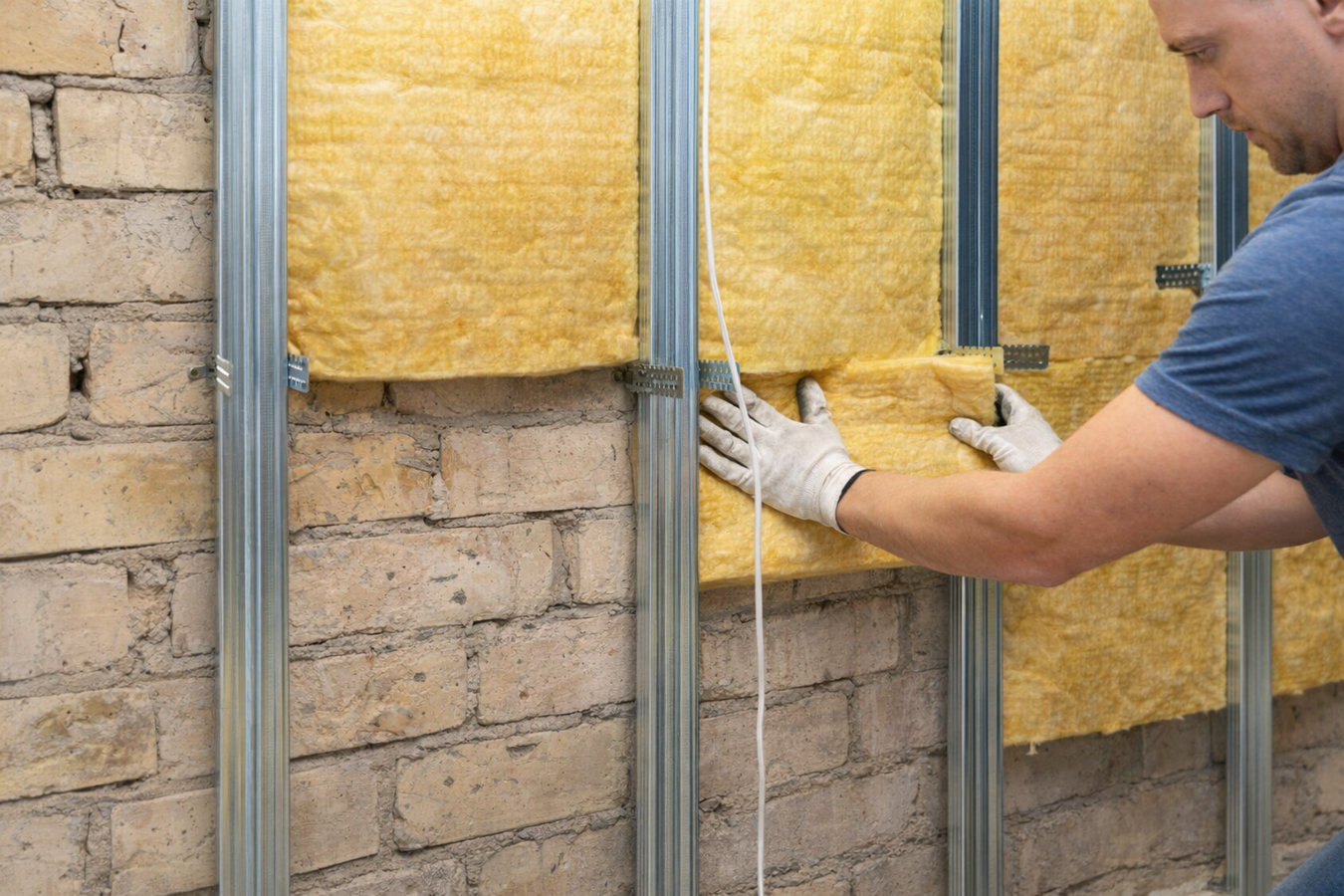
We offer two main approaches depending on how you use your basement and what condition it is in. The first is wall insulation - applying spray foam or rigid foam board to the interior of your foundation walls. This is common in unfinished basements and works well when the goal is to bring the basement into the conditioned space of the home. Our closed-cell foam insulation is the preferred material for basement walls in Stillwater given the moisture exposure that Oklahoma clay soils create.
The second approach is ceiling insulation - insulating the underside of your first floor, which is the top surface of your basement. This method leaves the basement as an unconditioned space but stops heat from moving freely between floors. Both approaches also involve sealing rim joists, which are among the leakiest spots in any older Stillwater home. We assess your specific situation and explain the trade-offs before recommending one approach over the other.
Brings your basement into the conditioned envelope - good for finished or frequently used basements.
Stops heat transfer between floors without conditioning the basement - best for utility-only spaces.
Eliminates one of the most drafty spots in older homes - the framing band above your foundation.
Seals gaps around pipes, wires, and structural penetrations before insulation goes in.
Expands to fill irregular spaces and seals air leaks at the same time as insulating.
Cut-to-fit panels for basement walls - a durable option for basements with consistent conditions.
Stillwater sits in a climate zone with wide temperature swings - summer highs that push well past 100 degrees and winter cold snaps that can drop below freezing, sometimes in the same month. That range means your basement walls and ceiling are working hard in both directions all year. On top of that, Payne County sits on clay-heavy soils that hold water and shift with moisture changes. After heavy rain, those soils push moisture toward your foundation, and an uninsulated or unsealed basement absorbs that moisture and lets it move upward into your living space. Addressing insulation and moisture together is the way to fix the problem for good, rather than treating one while the other keeps working against you.
We work with homeowners all across the Stillwater area - including customers in Ponca City and Enid who face the same clay soil and climate challenges. If you are not sure whether your basement is properly insulated, the Oklahoma State University Extension office at extension.okstate.edu/county/payne offers locally relevant guidance on home energy and weatherization for Payne County homeowners.
When you reach out, we will ask a few basic questions - your basement size, whether it is finished or unfinished, and whether you have noticed any moisture issues. This helps us arrive prepared with the right materials and a realistic time estimate. We respond within 1 business day.
We walk through your basement and check the walls, ceiling, any existing insulation, and signs of moisture or air leaks. At the end of this visit, you receive a written estimate that explains what we recommend and why - no vague quotes.
If your project requires a building permit from the City of Stillwater, we handle pulling it before work begins. Once permits are in hand, we lock in a start date. Most jobs are completed in one to two days.
Before we leave, we walk the basement with you and show you what was done and where. If a permit was pulled, a city inspector may schedule a follow-up visit - we coordinate that and let you know exactly what to expect.
Free estimate, no obligation. We respond within 1 business day and give you a clear written quote before any work begins.
(405) 338-4339Stillwater Insulation sends crews with years in the insulation trade and gives you a written scope of work up front. Our work is accountable - you have a clear record and a place to turn if anything goes wrong.
Stillwater's clay soils make basement moisture a real issue, not a hypothetical one. We assess your basement for signs of water intrusion before recommending a material - because insulating over a damp wall creates a bigger problem than the one you started with.
We know the older housing stock near OSU, the Payne County soil conditions that push moisture toward foundations, and the wide temperature swings that stress Stillwater homes every year. Local knowledge shapes how we approach every job.
When a permit is required, we pull it and see the job through inspection. That documentation protects your home's resale value and confirms the work was done to the City of Stillwater's standards - not just our word for it.
Stillwater homes have specific needs - aging housing stock near OSU, clay soils that hold moisture, and temperature swings that stress every part of the building envelope. We bring all of that local knowledge to every basement job we take on, from the first assessment to the final walkthrough.
Closed-cell foam is the most moisture-resistant material for basement walls and rim joists - ideal where Stillwater's clay soils push water toward your foundation.
Learn moreIf your home has a crawl space instead of a full basement, we provide the same thorough sealing and insulation to protect your floor structure.
Learn moreSpring humidity is on its way - schedule your free estimate now and have your basement sealed and insulated before the moisture season hits.